If you are buying your first Gunpla, start by comparing an Entry Grade or High Grade kit you actually like. Choose Real Grade when small, detailed assembly appeals to you; consider Master Grade when you want a larger model and a more involved project. The right choice depends on the exact kit, your workspace, and how you enjoy building.
The letters on the box are a useful starting point, but they cannot tell you how every joint assembles, how much shelf space a backpack needs, or whether you will enjoy a transformation. Here is how to turn those labels into a buying decision.
Grade and scale answer different questions
Scale describes size relative to the fictional subject. For the same mobile suit, a 1/100 model is larger than a 1/144 model. Different mobile suits have different proportions, so two kits with the same scale can still be very different sizes.
Grade identifies a product line. Bandai's official Gunpla guide presents Entry Grade, HG, RG, MG, and PG with different assembly and detail priorities. Typical Gunpla scales are 1/144 for EG, HG, and RG; 1/100 for MG; and 1/60 for PG. SD models use deliberately shortened proportions. Check the actual box: these are useful patterns, not a substitute for a product specification.
Line | Start here if you want… |
|---|---|
EG | A simple first build |
HG | Broad kit choice |
RG | Compact detail |
MG | A larger project |
PG | A display centerpiece |
SD | Stylized proportions |
Those suggestions are our buying framework, not official difficulty scores. You do not need to complete the rows in order, and building HG indefinitely is a perfectly good way to enjoy the hobby.
Entry Grade: a focused introduction
Entry Grade is worth checking when you want to learn how runner labels, part numbers, and snap-fit assembly work without adding a long tool list. Some exact kits support removal by hand: Bandai's Entry Grade RX-78-2 manual is one example to consult. Do not assume every model labeled Entry Grade, including non-Gundam subjects, has identical requirements.
Before choosing a box, compare included accessories as well as the mobile suit name. Different packages may include different equipment. Decide whether you want the simplest introduction or a particular weapon/display combination, then read the contents rather than guessing from the illustration.
High Grade: a practical place to explore
Bandai describes HG as a broad, collectible lineup in its official brand overview. That variety makes HG a useful starting point if liking the design is your strongest motivation. You can explore different series without committing every purchase to a large display project.
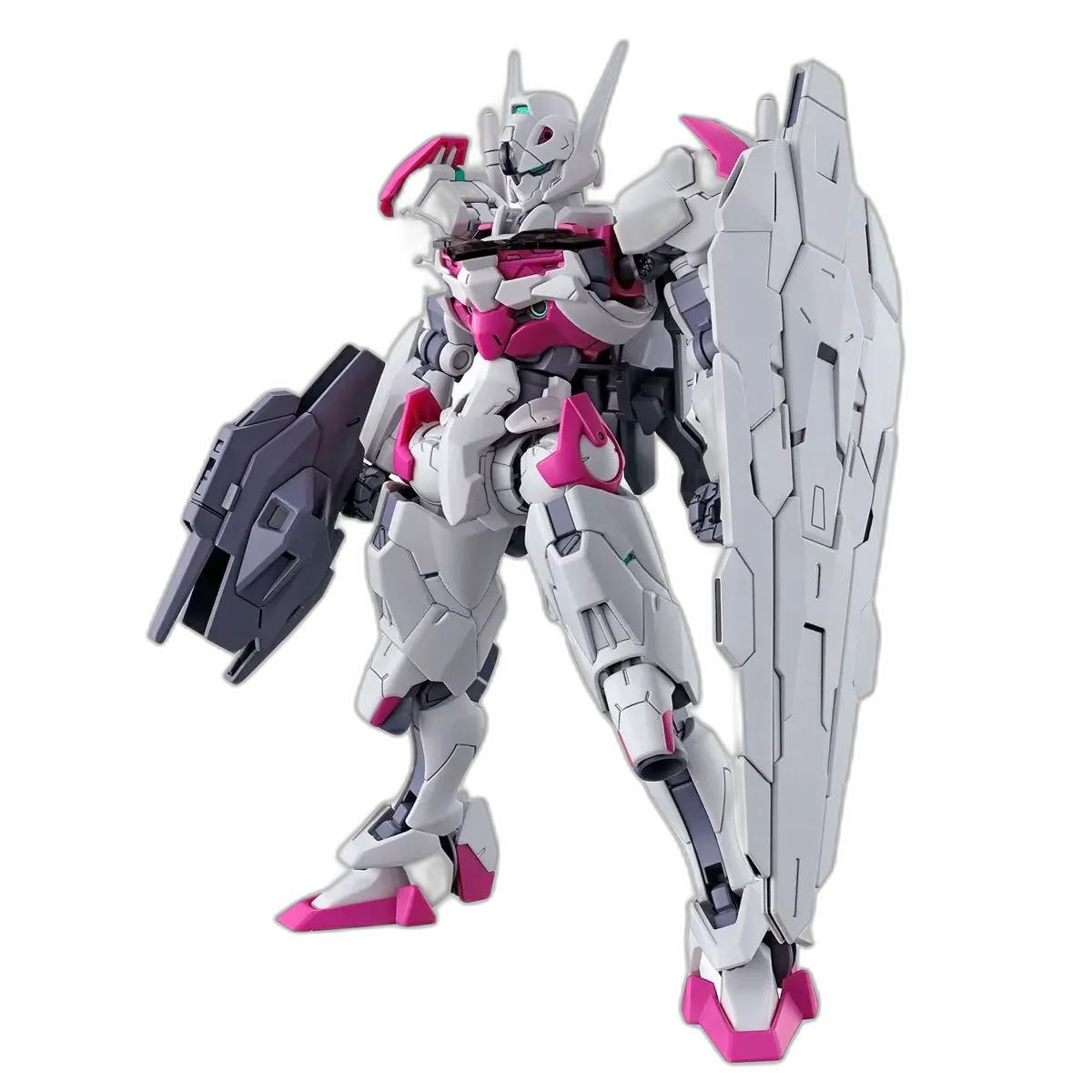
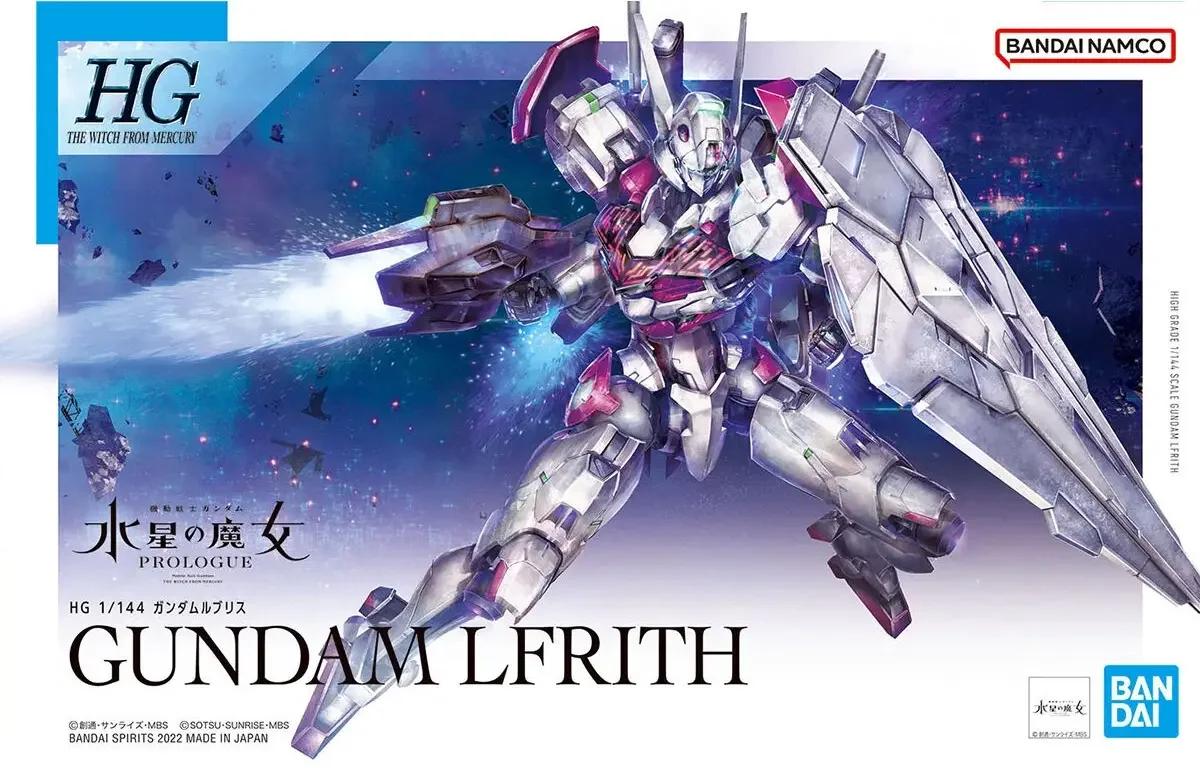
For example, the HG 1/144 Gundam Lfrith is an identifiable HG option in the Artrovo Gundam catalog. Use its listing to inspect the finished model and included parts. This is a catalog example, not a claim that we have tested its build or that it is the easiest kit for everyone.
An HG label does not make all releases identical. Look at the manual, tiny accessories, repeated assemblies, and any transformation you plan to use. Choose the project you want to work on, rather than treating a grade as a guarantee of a quick evening.
Real Grade or Master Grade?
Bandai's brand overview positions RG around detailed construction in a compact 1/144 format and MG around intricate internal structure and articulation. A useful personal question is whether you enjoy handling very small pieces or would prefer the larger working size of a typical MG.
Consider RG if shelf space is limited and you enjoy concentrating on small assemblies. Inspect the exact kit's manual first. Do not assume that every RG uses the same frame construction simply because another release did.
Consider MG if a larger finished model is part of the appeal and you have room for the build in progress. Larger parts can be easier to see, but a larger kit can also involve more assemblies, accessories, and handling. Larger does not automatically mean easier.
If your first kit is an RG or MG you love, you can still approach it patiently. Set up good lighting, follow the manual, and give yourself permission to stop between sections. There is no requirement to finish in one sitting.
PG, SD, and the names between
PG is a choice to make after measuring the display space and reviewing the particular kit's assembly and accessory requirements. Budget for the whole project, including any support equipment it needs, rather than just the box.
SD refers to a stylized look, not one uniform construction style. Check the exact sub-line; do not assume MGSD will feel like a simple SD EX-STANDARD build. Likewise, names such as FULL MECHANICS, MGEX, and Ver.Ka deserve their own product-page check. Avoid buying on an acronym alone.
A five-minute check before checkout
Pick the subject. Would you still want this design if it were available in only one grade?
Measure the destination. Allow room for the base, wings, weapons, and the pose you want—not only the model's height.
Open the manual. Look at runner maps, tiny parts, stickers or decals, and special assembly warnings.
Check what is included. A display stand or effect part shown in a promotional image may be sold separately.
Read availability and delivery details. On-hand stock differs from distributor stock, which comes to Artrovo Gundam before shipping to you.
Leave room in your budget for basic plastic nippers and cleanup supplies where required. Our first-build tools guide explains what to buy now and which extras can wait.
Choose your next build
Browse the Gunpla and mecha department with one clear preference: a simple introduction, a favorite design, compact detail, or a larger display project. Narrowing the purpose first makes the grade comparison much easier.
For the assembly basics after the box arrives, keep the beginner's guide nearby. Your first build is successful when you understand the process and enjoy the result; it does not need the most elaborate label.
Reviewed September 11, 2026. Cover image: HG Gundam Lfrith catalog imagery; it illustrates one kit, not a comparison of grades or a photograph of a staff build.